
![[LOGBOOK] Selection of Flared Flat-Bottom Catamaran Hull Design for Enhanced Stability](/images/research/body-design/hull-comparison.webp)
Catamaran Flat Hull with Flared Sides Design Selection
During the hull design stage, the selection of hull geometry becomes a critical factor influencing vessel stability, operational efficiency, and maneuverability, particularly for operations in calm inland waters such as lakes.
The team conducted a comparative study of several catamaran hull configurations to determine the most suitable design for the intended operational requirements.
1. Catamaran Hull Design Alternatives
In the initial design phase, the following catamaran hull configurations were evaluated:
- Round Hull Catamaran
- Flat-Bottom Catamaran with Flared Sides
Each configuration exhibits distinct hydrodynamic behavior and stability characteristics.
2. Characteristics of the Round Hull Catamaran
The round hull catamaran offers smoother motion response and gradual interaction with wave disturbances.
However, this design presents a major limitation:
- Relatively Low Initial Stability
Vessels with round hull configurations tend to have a smaller initial righting moment, resulting in slower recovery to an upright position after wave-induced disturbances.
Due to this characteristic, the round hull configuration is less suitable for applications requiring a highly stable operational platform.
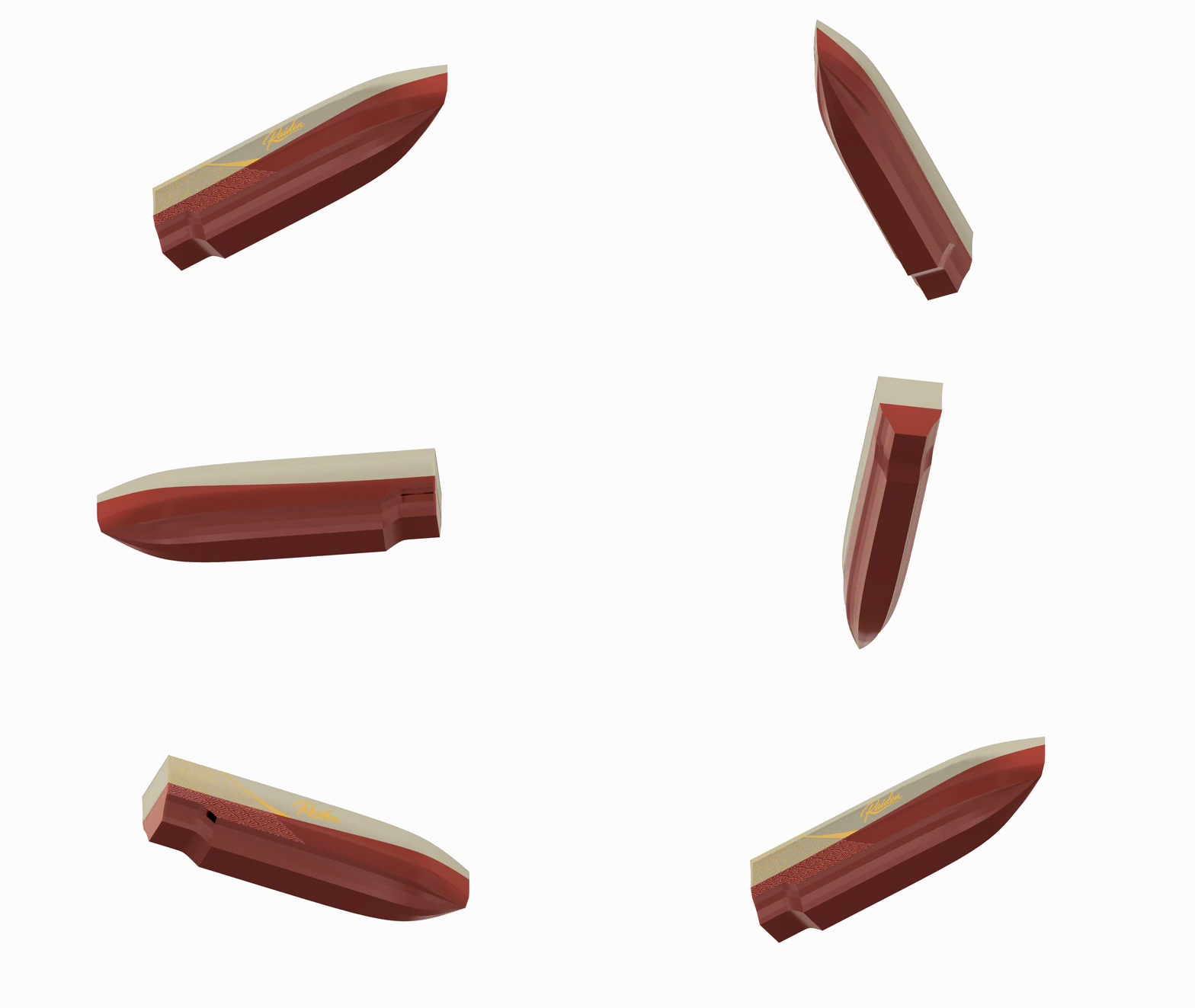
3. Characteristics of the Flat-Bottom Catamaran with Flared Sides
As an alternative, the flat-bottom catamaran configuration provides significant advantages in terms of initial stability.
3.1 Initial Stability
The flat-bottom hull geometry delivers higher initial stability, enabling the vessel to:
- Return more quickly to an upright position
- Maintain stability under wave disturbances
- Provide a more rigid and stable platform for onboard equipment installation
3.2 Role of Flared Sides
The incorporation of flared sides into the hull design offers additional benefits, including:
- Wave impact mitigation
Flared sides help deflect incoming waves away from the deck, reducing the risk of water ingress during wave encounters. - Improved buoyancy and safety
This design increases the upper hull volume, contributing to enhanced buoyancy and overall operational safety.
4. Design Selection Justification
The combination of a flat-bottom hull with flared sides results in a catamaran design that:
- Exhibits high initial stability
- Provides reliable maneuverability
- Operates efficiently in calm water environments
- Supports increased payload capacity and equipment integration
Based on operational requirements that prioritize stability and reliability for lake-based missions, the team selected the Flared Flat-Bottom Catamaran Hull as the most suitable hull configuration.
Conclusion
The selection of the flared flat-bottom catamaran hull was driven by stability, safety, and operational efficiency considerations.
Compared to the round hull configuration, this design offers superior performance for calm inland water applications and supports stable, reliable vessel operation throughout mission execution.
About the Author
Logbook & experiments documented by Bagas Widi. Dedicated to advancing autonomous maritime systems.